Full report

Summary report
Easy Read

BSL
What we found
Our report found that Scotland’s Gypsy Travellers were pushed to abandon their culture, experienced child removal, and were housed in substandard accommodation as part of efforts by the government and local authorities to forcibly assimilate the community using legislation and policy.
Victims have told us that because of the Tinker Experiment, they live in a 'no man's land', where they don't feel accepted by the settled community or the wider Gypsy Traveller community.
The report details 20 key findings which cover both historic and continuing human rights issues. They focus on the forced assimilation of Scotland's Gypsy Travellers as well as issues relating to the rights to adequate housing, private and family life, health, education, employment and cultural life.
The report makes several detailed recommendations for duty bearers, with the overarching recommendation being for the State to adopt a transformative reparations approach, including compensation, rehabilitation, satisfaction and guarantees of non-repetition.
Have 5 minutes?
Read our Executive Summary - available as a PDF, a screen-reader accessible Word document and an Easy Read - below. Or watch the report in BSL on our YouTube channel or on the BSL page of our website.
Have more time?
Read the full report below. Available as a PDF and an accessible Word document.

Publications

Why we are spotlighting this issue
We all have the right to enjoy and contribute to cultural life. However, people don’t always have equal access to this right.
The Scottish Gypsy Traveller community told us they were victims of the ‘Tinker Experiment’, where members of the community were forcibly settled into static accommodation sites from the 1940s onwards. This scheme was supported by the Government, Church of Scotland and local authorities.
Members of the community were forced to live in culturally unsuitable accommodation in the form of wooden huts - which lacked proper heating and plumbing until the early 2000s - and made to attend schools where they say they experienced significant discrimination.
After 15 years of campaigning and advocacy by the victims of the experiment an apology, the First Minister of Scotland gave an apology in June 2025. The Church of Scotland issued an apology later that day. In January 2026, Perth and Kinross Council apologised to victims for their role in the experiment.
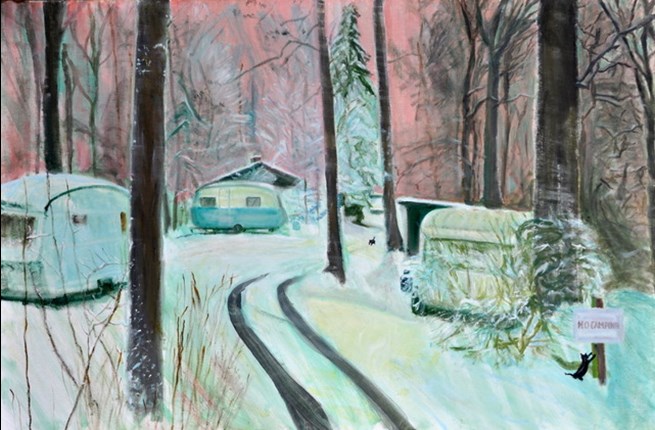
“Big chill at Bobbin Mill” by Shamus McPhee
Recognising human rights
Several human rights treaties protect the rights of Gypsy Travellers to preserve their culture and seek redress, which means to make things right when they go wrong. This includes the United Nations’ Convention on the Elimination of Racial Discrimination (CERD) and the Council of Europe’s Framework Convention for the Protection of National Minorities (FCNM). The UK Government has ratified both treaties (CERD in 1969 and FCNM in 1998) which means they have agreed to uphold the rights contained within them.
In 2024, the body that monitors implementation of the Convention on the Elimination of All Forms of Racial Discrimination, called the Committee on the Elimination of Racial Discrimination, addressed the concerns of the victims around a lack of progress on an apology. They said:
"The Committee is concerned about reports that the causes and consequences of the forced assimilation of Gypsy/Traveller communities in Scotland have not yet been adequately addressed by the State party, notably the government of Scotland.
The Committee recommends that the State party, including the government of Scotland, adopt all measures necessary to tackle the causes and legacy of forced assimilation faced by Gypsy and Traveller communities and ensure that members of these communities can participate in all initiatives in this regard.”
Human rights concerns about the 'Tinker Experiment’ were also raised by the advisory committee on the Framework Convention for the Protection of National Minorities in 2022, who said: “The Advisory Committee considers that truth and reconciliation processes in the context of past assimilation can contribute to building mutual trust in the long run.”
The Scottish Government commissioned research in 2022 to establish the facts surrounding the Tinker Experiment. Over the course of this work victims of the experiment told us they had been excluded from this research and therefore unable to participate in the redress process. This research findings were published in June 2025, alongside the apology.
This project was part of our wider focus on the rights of at risk, specially-protected groups, highlighted as a key priority in our Strategic Plan 2024-28.
What we did
This project examined denial of the rights to cultural recognition of Scotland’s Gypsy Travellers as a human rights issue. It looks at the impact of the experiment on the community, past and present.
Our project was informed by an independently commissioned research report and an expert legal analysis. The research report was produced by Dr Rhona Ramsay and co-produced with victim of the experiment and one of the founders of RAJPOT Rosanna McPhee. RAJPOT (Refuge for Allies of Justice and Persons from Oppressed Tribes) is a voluntary organisation working to give indigenous and cultural communities a voice. The research report explored experiences of the Tinker Experiment through victim testimony.
Our report, "No man's land": a human rights assessment of the Tinker Experiment, draws on the independent research and victim's experiences, together with an examination of the relevant international human rights laws and frameworks.
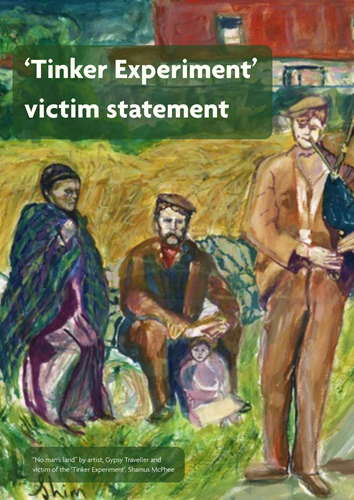
Throughout this project, the SHRC was committed to ensuring that victims of the experiment could lead and meaningfully contribute to this work. Before publishing our report, we shared it with the victims who generously shared their experiences to inform the project. Alongside our report, we have published a victim statement, which allows victims the opportunity to reflect in their own words on the findings of the report, as well as to reiterate the change they want to see.