

Climate Change and Human Rights: How International Human Rights Law Can Shape Domestic Legal Frameworks for Climate Justice. (A Case Study of Malawi)
Guest blog post by Alphaeus Ngonga, University of Glasgow.
This post is part of a series of guest blog posts written by PhD researchers and SHRC’s LLM Human Rights Dissertation Placement students who took part in our Human Rights Research Knowledge Exchange Showcase last year.
Introduction
Climate change represents one of the most pressing global challenges of the 21st century, with profound implications for human rights and well-being. Rising temperatures, increased sea levels, extreme weather events, and environmental degradation present a serious threat to fundamental rights, including the rights to life, health, food, water, and housing. These severe weather events can affect the realisation of fundamental rights and cause displacement. Climate-induced disasters, such as cyclones, disproportionately impact marginalised and vulnerable populations in developing countries.
This blog explores the intersection of climate change and human rights, with a particular focus on legal frameworks that promote climate justice. Climate justice is a concept that centres on ensuring fairness and equity in tackling the effects of climate change. Drawing on my ongoing PhD legal research in Malawi as a Case Study, this project explores the lived experiences to examine how international human rights law can influence domestic legal responses to climate-related human rights violations.
Climate Change and Vulnerability. (Malawi Case Study Area)
Malawi, one of the least developed countries in Southern Africa, is particularly vulnerable to climate-related disasters due to its limited adaptation capacity, including a reliance on rain-fed agriculture, which poses a significant threat to food security.[1] Over the past three decades, climate-related extremes have been the leading cause of natural disasters in the region.[2] The increasing frequency and intensity of tropical cyclones, thunderstorms, and droughts, driven by climate change, have led to rising fatalities, injuries, and widespread destruction of infrastructure.[3] However, Malawi, like many developing nations, has yet to implement legislation addressing climate change.
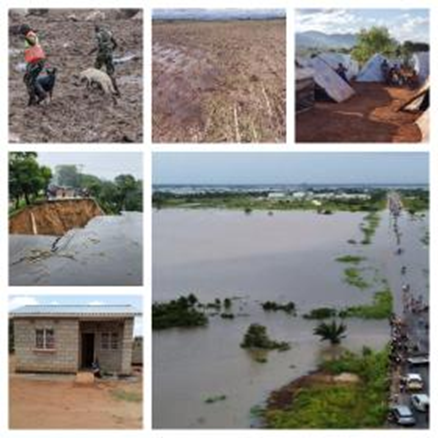
In March 2023, Cyclone Freddy devastated Malawi, resulting in 679 fatalities, over 659,278 individuals displaced, approximately 537 people missing, 2,178 injured, and severely damaged roads, schools, and hospitals and impacted livelihoods, triggering a major humanitarian crisis.[4] The cyclone starkly illustrates the link between climate change and human rights violations, and the urgent need for climate-resilience strategies to protect vulnerable populations.
Legal Gaps and Climate Justice
Although the destruction inflicted by such intense weather events is deeply distressing, what is even more concerning is the inadequate response and systemic weaknesses that have hindered effective recovery and resilience-building efforts for the communities affected by climate-related disasters.[5] The effects of climate change-related disasters in developing nations, such as Malawi, range from inadequate disaster response mechanisms to the absence of robust, enforceable climate change laws, climate justice awareness, accountability, and Climate financing.
Climate financing pledges represent a setback for communities in developing countries impacted by climate change, despite the guiding international principle of “common but differentiated responsibility,” which calls for developed nations to support vulnerable nations.[6] Scotland, however, has taken a notable lead in this area through its Climate Justice Fund, which has adopted a rights-based approach to climate action in countries such as Malawi.[7]
In light of the inadequacy of the broader international and domestic legal responses to the climate crisis,[8] a need arises for clear and enforceable legal frameworks on climate change that incorporate considerations of climate change alongside human rights. Several international instruments provide a foundation for this. Some notable international human rights instruments include the UDHR (Articles 3, 25(1), 28) which emphasises the right to life and an adequate standard of living; the ICESCR (Article 11), which guarantees the right to food and shelter, both of which are threatened by climate change; CRC (Article 24), which underscores children’s rights to a healthy environment; and the CRPD (Article 28), which addresses the protection of disabled individuals who are often disproportionately affected by climate disasters. Some regional instruments, such as ACHPR on the Rights of Women (the Maputo Protocol, Article 15), reinforce women's right to adequate food.
These important instruments affirm that individuals, communities and populations affected by the climate crisis are entitled to remedy and reparations.[9] The UN Secretary-General urges nations to fulfil these obligations, noting that, within the UN climate change framework, climate-related damages encompass the actual or possible effects of climate change that negatively impact human and natural systems, including loss of life, displacement, and infrastructure.[10] Malawi Scotland’s Climate Justice Fund exemplifies this by acknowledging the disproportionate impact of climate change on the Global South and supporting efforts to address existing inequalities.[11]
Despite the UN Secretary-General’s call for nations' obligations, the existing legal framework for global climate change does not adequately address the challenges posed by climate change.[12] However, addressing these climate injustices requires more than mere policy reform. It demands a grounded, human rights-based approach that is informed by lived experiences.[13] Grassroots activism shapes climate justice narratives and holds governments accountable for their actions. Activists challenge ineffective policies and empower communities to assert their rights, which are essential for rights-based climate litigation.
Conclusion
A constitutional climate justice approach rooted in international human rights standards is essential for addressing climate-induced violations domestically. Governments must strengthen national legislation and align it with international instruments, such as the Kyoto Protocol, the UNFCCC, and the Paris Agreement. This work contributes to global climate justice discourse, advocating for stronger legal protections for vulnerable nations and communities. It emphasises integrating climate justice into human rights law to protect those most affected by climate change at the national level. Cyclone Freddy starkly reminds us of the consequences of inaction, underscoring the need for comprehensive climate justice interventions, including state responsibility.
Further Reading
Adreinto N, ‘Tropical Cyclone Freddy Exposes Major Health Risks in the Hardest-Hit Southern African Countries: Lessons for Climate Change Adaptation’ (2023) 6 IJS Global Health, accessed 20 January 2025
Bedford N, Mcavoy TSC and Stevenson-Graf L, ‘FIRST NATIONS PEOPLES, CLIMATE CHANGE, HUMAN RIGHTS AND LEGAL RIGHTS’ (2021) 40 University of Queensland Law Journal 371+
Mertens DM, ‘Transformative Research Methods to Increase Social Impact for Vulnerable Groups and Cultural Minorities’ (2021) 20 International Journal of Qualitative Methods 16094069211051563
Endnotes
[1] Shannon Marie McLaughlin, Martina Bozzola and Anne Nugent, ‘Changing Climate, Changing Food Consumption? Impact of Weather Shocks on Nutrition in Malawi’ (2023) 59 The Journal of Development Studies 1827.
[2] Mxolisi E Shongwe and others, ‘Projected Changes in Mean and Extreme Precipitation in Africa under Global Warming. Part I: Southern Africa’ (2009) 22 Journal of climate 3819.
[3] Robert Scholes and Francois Engelbrecht, ‘Climate Impacts in Southern Africa during the 21st Century’ [2021] Report for Earthjustice and the Centre for Environmental Rights. Global Change Institute, University of Witwatersrand.
[4] Marina Menga, ‘Climate Intelligence at Work: The Case of Cyclone Freddy’ (Foresight, 19 April 2023) accessed 22 March 2024.
[5] Nicholas Aderinto, ‘Tropical Cyclone Freddy Exposes Major Health Risks in the Hardest-Hit Southern African Countries: Lessons for Climate Change Adaptation’ (2023) 6 IJS Global Health, accessed 20 January 2025.
[6] Steven Vanderheiden, ‘Justice and Climate Finance: Differentiating Responsibility in the Green Climate Fund’ (2015) 50 The International Spectator 31.
[7] ‘Climate Justice Fund’, accessed 9 June 2025.
[8] Maytal Gilboa, Yotam Kaplan and Roee Sarel, ‘Climate Change as Unjust Enrichment’ (2024) 112 Georgetown Law Journal 1039+.
[9] ‘A/HRC/57/30: Analytical Study on the Impact of Loss and Damage from the Adverse Effects of Climate Change on the Full Enjoyment of Human Rights, Exploring Equity-Based Approaches and Solutions to Addressing the Same - Report of the Secretary-General’ (OHCHR), accessed 25 February 2025.
[10] Christina Voigt, ‘Chapter 9 State Responsibility for Damages Associated with Climate Change’, Research Handbook on Climate Change Law and Loss & Damage (Edward Elgar Publishing 2021), accessed 20 February 2025.
[11] ‘Climate Justice Fund’, accessed 9 June 2025.
[12] ‘Climate Justice Fund’, accessed 9 June 2025.
[13] Narelle Bedford, Tony SC Mcavoy and Lindsey Stevenson-Graf, ‘FIRST NATIONS PEOPLES, CLIMATE CHANGE, HUMAN RIGHTS AND LEGAL RIGHTS’ (2021) 40 University of Queensland Law Journal 371+.